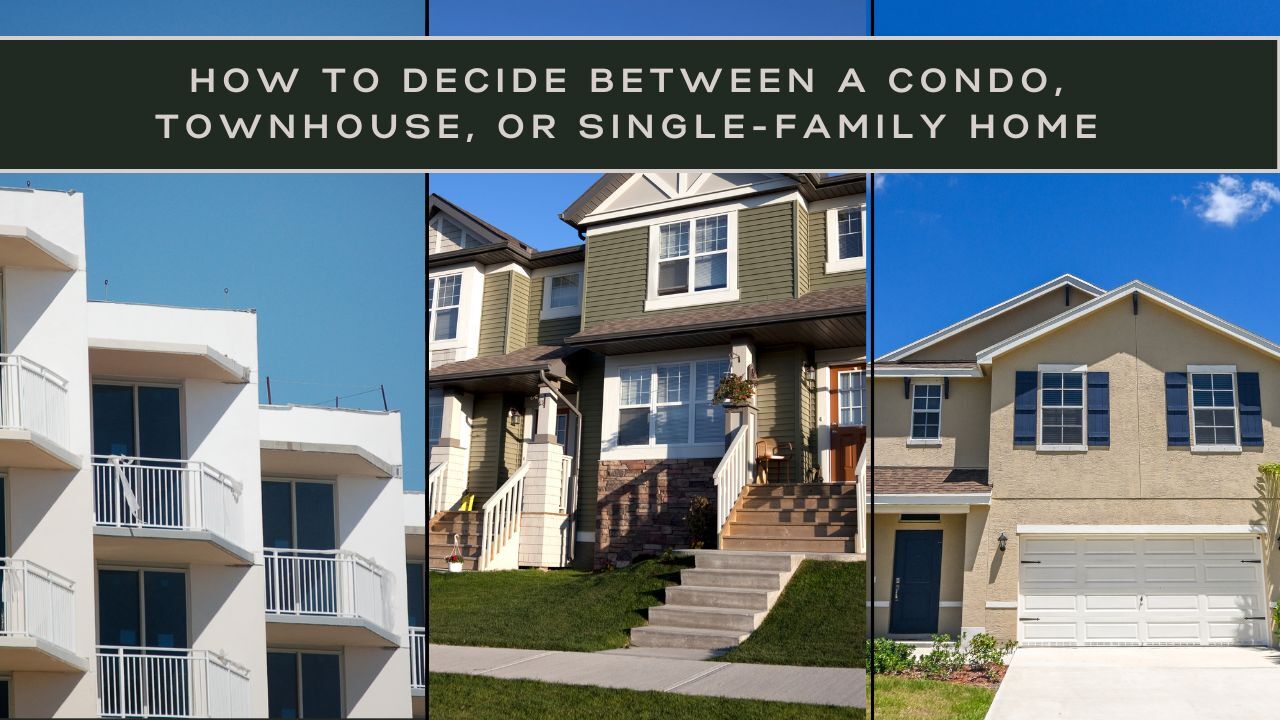
 Choosing the right type of home is one of the most important decisions a buyer can make. Condos, townhouses, and single-family homes each offer unique benefits and challenges. The best choice depends on your lifestyle, budget, and long-term goals. Understanding what sets them apart can help you make a confident and informed decision.
The Condo Lifestyle
Condos are ideal for buyers who want convenience and minimal maintenance. In most communities, the homeowner’s association takes care of exterior upkeep, landscaping, and shared amenities. This can be especially appealing for people with busy schedules or those who prefer not to handle maintenance themselves. Condos often come with amenities such as pools, gyms, and security features that provide comfort and peace of mind.
However, condos also include association fees, and buyers should carefully review the rules and regulations. Monthly dues can vary widely depending on what services are covered. Additionally, shared walls and common spaces mean less privacy than detached housing, so it is important to consider how much independence you want in your living environment.
The Townhouse Advantage
Townhouses offer a balance between condo living and single-family ownership. They usually share one or two walls with neighboring units but still provide more space and independence than condos. Many townhouses include small yards or patios, private garages, and multiple levels that give the feel of a traditional home.
Townhouse communities often maintain common areas, so you enjoy a degree of convenience like condo living. The homeowner’s association may handle exterior work, which reduces your maintenance responsibilities. However, as with condos, association fees and restrictions apply, so reviewing those details before purchasing is essential.
The Freedom of a Single-Family Home
For buyers who value privacy and space, a single-family home is often the preferred choice. Detached homes allow for complete control over your property, from the landscaping to design changes. They typically include larger yards, more storage space, and greater flexibility for future expansion.
On the other hand, ownership also means full responsibility for maintenance and repairs. Landscaping, roof upkeep, and system maintenance all fall to the homeowner. While these responsibilities come with additional costs, many buyers appreciate the independence and sense of ownership that come with them.
Key Factors to Consider
When deciding between these options, consider your lifestyle first. If you value convenience and community amenities, a condo or townhouse may fit best. If you prefer privacy, space, and flexibility, a single-family home may be worth the additional effort. Also think about long term costs, including insurance, property taxes, and maintenance.
Making the Right Choice
There is no one-size-fits-all answer when choosing the right home type. Each option provides a different balance of freedom, maintenance, and expense. By carefully evaluating your needs and working with a knowledgeable real estate agent, you can find a home that aligns with your goals and lifestyle.
 Your home is likely one of your most valuable investments, which is why understanding home appraisals is essential. Whether youíre buying, selling, or refinancing, knowing what an appraisal involves can help you make informed decisions.
 The first step to spotting a great deal in real estate is to understand the current market conditions. Is it a buyer’s market with plenty of inventory and lower prices, or a seller’s market, where competition is high and prices rise quickly? Knowing the market type helps you identify opportunities. In a buyer’s market, you might find undervalued homes or motivated sellers. In a seller’s market, great deals might be rare but still possible with the right strategy.
 When your house hunting, you are likely focused on the big things like: location, price, layout, and condition. But there is one small detail that can have a surprising impact on your homeownership experience, the street name. While it may seem insignificant at first, the name of your street can affect everything from resale value and first impressions to daily convenience and even safety.
 When buying a home, most buyers focus on location, price, and features. However, deed restrictions—legally binding rules that dictate how you can use your property—are equally important. Ignoring them can lead to unexpected limitations and challenges.
 Buying a home is one of the biggest financial and lifestyle decisions you’ll make. While most buyers focus on location, price, and size, there are several overlooked factors that can impact your long-term satisfaction. Here’s what to keep in mind when searching for the perfect home.