 Once you’re done with debt and you’ve started to save, it’s commonly the case that you’ll start hearing about the risks and rewards of investing in stocks or real estate. Unfortunately, it can be difficult for many people to know what type of investment is going to work better for them down the road. If you’re currently considering what you should put your money into, here are some reasons you may want to turn to real estate.
It’s Something You Can See
While investing in the stock market will give you the ability to invest as little or as much as you want, a home will take a monthly payment and a down payment in order to make the deal. Fortunately, this means that you’ll be investing money every month into something that belongs to you and that you can see. A home is not only something you can invest in all the time, it will enable you to avoid putting money into rent that you’ll never get back.
Saving Money On Tax Breaks
There may be a certain amount of volatility with any market investment, but when it comes to buying a home you also have the benefit of tax breaks that are designed specifically for homeowners. In addition to the ability to deduct interest on your main residence if you’ve lived in your property for a minimum of two of the last five years, you’ll also be able to sell it tax-free. Investing in a home certainly takes savings, but there are many available tax benefits that can save money.
A Sense Of Security
Many people want to invest in a home because it offers up a piece of something that they can really own. However, another appealing aspect of having a home is that you’ll be removed from the day-to-day rumblings of the stock market. Investing can make people more than a little weary, even if they’re knowledgeable about the markets, and this can cause people to sell off and lose money when the going gets tough.
Investing in real estate and the stock market both involve some degree of financial risk, but you might not be aware that there are several added benefits of buying a home. From the tax break incentives to the sense of security, real estate can often be the better financial route to take. If you’re currently considering a home, contact one of our real estate professionals for more information.
 The springtime is known to be one of the best times to put your home up for sale. However, if you’re not necessarily planning on engaging a real estate agent, it’s important to be prepared for all of the hard work involved in putting your home up for sale. Whether you’re new to the market or you’ve never sold a home on your own before, here are some questions to ask yourself so you’re prepared for selling in the coming season.
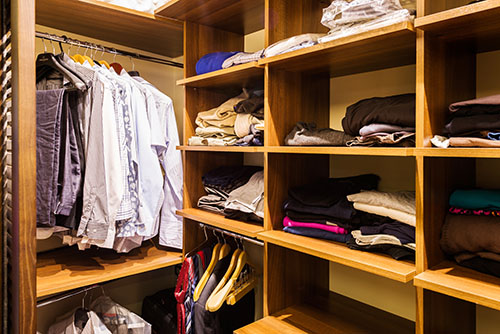 There is a particular pleasure in a well-organized closet; not to mention the space and energy-saver that it becomes! And the best part is that you don’t need to spend tons of money to get a dapper closet space. A lot of the work is just thinking outside the (clothing) box.
 Whether you know a little bit about the market or you’ve sold a home before, you may be considering pricing your own home to avoid the assistance of a real estate agent. However, there are a number of benefits associated with consulting an agent when selling your home. Before making a final decision, consider the following tips.
 Windows can add a lot to the look of your home, and this means that dressing them up properly is an important key for aesthetic appeal. While draggy, neutral-colored curtains can be one of the less exciting aspects of decorating your home, here are a few ways you can adorn the most basic of home fixtures and turn your windows into something truly unique.
 Whether you’re moving to a new home or you have a new family pet, it can be a struggle to make the place a little friendlier for them. From the garbage can to the cupboards and doors, there can be a lot of dangers that have the ability to hurt your furry friend you might not be aware of. If you’re looking for some simple ways to make their life a little easier, here are a few things you can do.