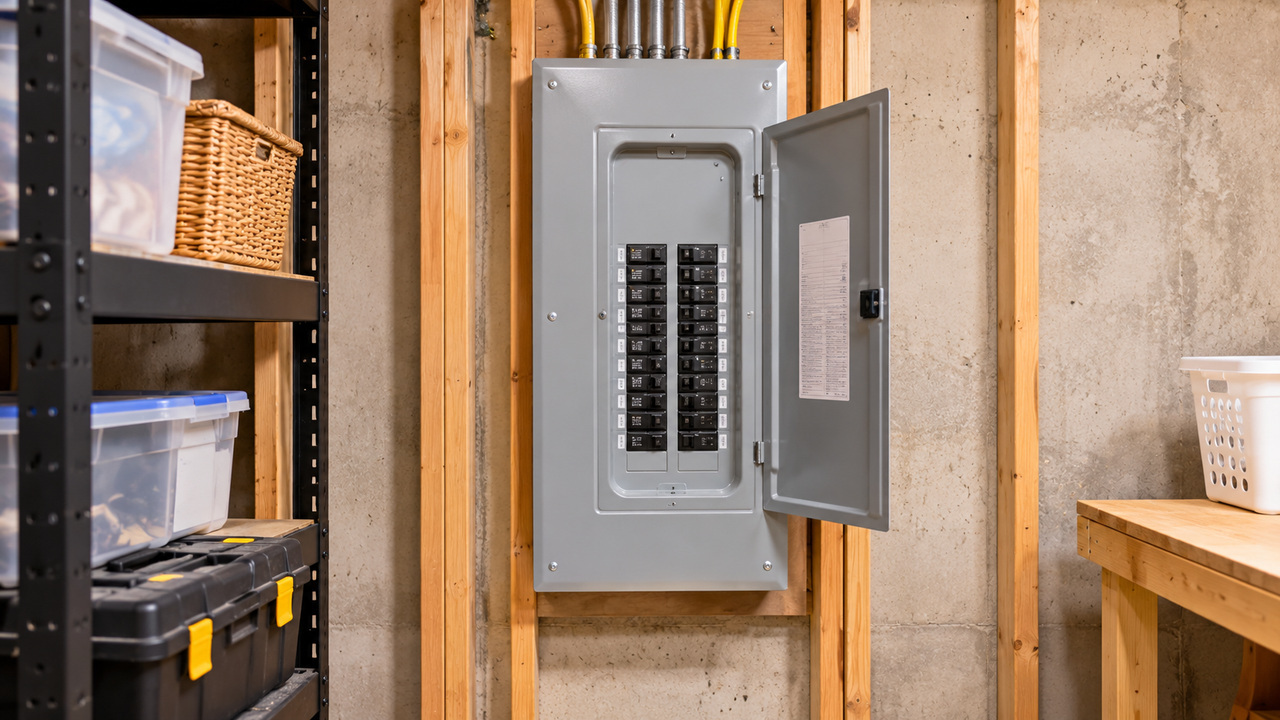
 Most homebuyers know to ask about the age of a home’s electrical system. Fewer think to look at the space surrounding the electrical panel. Its location, accessibility, and nearby storage can affect routine maintenance, emergency access, and the ease of future electrical work.
Find the Panel During the Showing
Electrical panels may be in garages, utility rooms, basements, closets, or other areas. Ask the agent to show you where the main panel is located. You do not need to remove the cover or touch any wiring. Simply observe whether the panel is easy to find and approach.
Notice whether shelves, appliances, furniture, or stored belongings obstruct the front of the panel. Clear access matters because a qualified electrician may need room to inspect or service the equipment.
Look for Signs Worth Asking About
Without opening anything, look for obvious exterior concerns such as water stains nearby, damaged covers, or unusual placement close to potential moisture sources. These observations do not establish an electrical defect, but they are reasonable topics for an inspector.
Avoid assuming that a tidy-looking panel means the system is safe. Important electrical concerns may be hidden and require professional evaluation.
Consider Your Future Plans
If you hope to add an electric vehicle charger, upgrade appliances, install a workshop, or remodel a kitchen, the existing electrical setup may affect the project. Panel capacity, available circuits, and the home’s overall service should be evaluated by a qualified electrician rather than guessed from appearance.
Even when the current system works well for the seller, it may not support every improvement you envision without additional work. Asking early can help you plan for costs and timelines.
Understand Inspection Limits
A general home inspection typically includes a visual assessment of accessible electrical components, but the scope varies. Inspectors may recommend further evaluation if they identify concerning conditions. A licensed electrician can investigate specific questions and advise on appropriate repairs or upgrades.
Do not attempt to test breakers repeatedly, remove panel covers, or investigate exposed wiring yourself during a showing. Those tasks should be left to qualified professionals.
A Practical Detail With Long-Term Value
The electrical panel is rarely the feature that sells a house, yet it plays an important role in maintaining it. Knowing where the panel is, whether it is accessible, and what questions to ask about future electrical needs can make your evaluation more complete.
When touring a property, spend a moment locating this often-overlooked part of the home. It may help you avoid surprises when it is time for an inspection, repair, or renovation.
 Many buyers walk through a home and focus on what is already there, but it is just as important to notice what the home allows you to do later. Your life may change after you buy. Your household could grow, your work schedule could shift, relatives may visit more often, or you may need new space for hobbies, storage, or privacy. A home that works today should also have some flexibility for tomorrow.
 A home can look beautiful on the surface, but a past flooding event can create long term challenges that buyers need to understand. If you are considering a property with any history of water intrusion, taking time to learn the risks can protect your safety, your finances and your peace of mind.
 Selling a home can feel emotional and overwhelming, especially when financial pressures make it difficult to keep up with payments. For some homeowners, a short sale becomes a realistic path toward a fresh start. If you are exploring this option, understanding how the process works can help you move forward with confidence.
 When buying or selling a home, the foundation is one of the most important yet overlooked elements. It supports the structure, affects durability, and can influence everything from comfort to resale value. As a real estate agent, I often remind clients that understanding the type and condition of a home’s foundation can help them make informed choices and avoid costly surprises later on.
 When a home sits on the market longer than expected, the price is often the first thing blamed. While overpricing can be a major factor, it’s far from the only one. One of the most common culprits is poor presentation. Buyers today form opinions within seconds, often based on online photos before they even step foot inside.