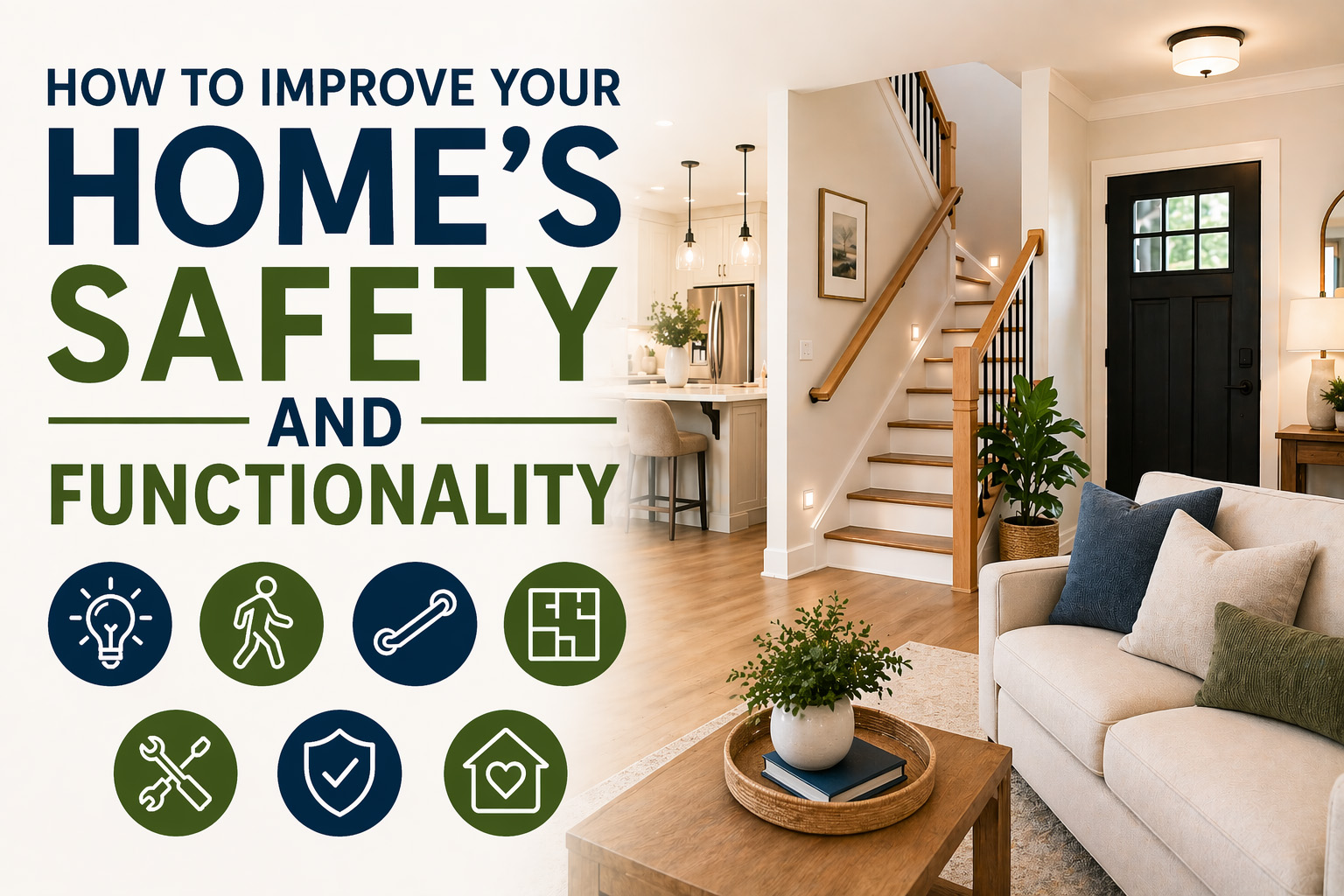
 When people think about upgrading their home, they usually picture aesthetic changes: new floors, fresh paint, maybe a kitchen remodel.
But the real game-changers? Safety and functionality.
The truth is, most homes have small risks and inefficiencies hiding in plain sight. The good news: many of them are easy (and affordable) to fix.
Here are smart ways to make your home safer, more comfortable, and easier to live in.
1. Upgrade Your Lighting
Good lighting isn’t just about ambiance—it’s about visibility and safety.
Dim or uneven lighting increases the risk of trips and falls, especially in:
- Hallways
- Staircases
- Entryways
Simple upgrades:
- Swap to brighter LED bulbs
- Add motion-sensor lights in key areas
- Use under-cabinet lighting in kitchens
Bonus: You’ll likely lower your energy bill too.
2. Eliminate Everyday Trip Hazards
This one sounds obvious, but it’s one of the biggest causes of injuries at home.
Watch for:
- Loose rugs or curled edges
- Cords running across walkways
- Cluttered floors or tight pathways
A quick walkthrough of your home with a “what could I trip on?” mindset can catch more than you’d expect.
3. Make Bathrooms Safer
Bathrooms are one of the highest-risk areas in any home.
Some easy upgrades that make a big difference:
- Install grab bars near toilets and showers
- Add non-slip mats or strips
- Improve lighting around mirrors and floors
These changes are especially helpful for guests, aging family members, or anyone recovering from injury.
4. Improve Flow and Accessibility
Functionality isn’t just about safety—it’s about how easily your home works for you.
Ask yourself:
- Are commonly used items easy to reach?
- Are walkways clear and wide enough?
- Do certain areas feel cramped or awkward to move through?
Sometimes simply rearranging furniture can make your home feel way more usable.
5. Stay on Top of Small Repairs
That loose railing. That sticking door. That wobbly step.
Individually, they seem minor. Together? They quietly add risk.
A good rule: if something makes you pause or adjust how you move through your home, it’s worth fixing.
6. Check Your Safety Essentials
It’s not the most exciting task, but it’s one of the most important.
Make sure you have:
- Working smoke and carbon monoxide detectors
- Easily accessible fire extinguishers
- Secure locks on doors and windows
And yes—actually test them. Not just once. Regularly.
7. Think Ahead (Even If You Don’t Need It Yet)
You don’t have to be planning for aging-in-place to benefit from smarter design.
Small proactive choices—like better lighting, safer flooring, or easier access—can make your home more adaptable over time.
Future you will be very grateful you didn’t wait.
Final Thoughts
Improving your home’s safety and functionality isn’t about turning it into a hospital—it’s about making everyday life smoother, safer, and less stressful.
If you’re thinking about selling, these improvements can also make your home more appealing to buyers, because a home that feels easy to live in is always a win.
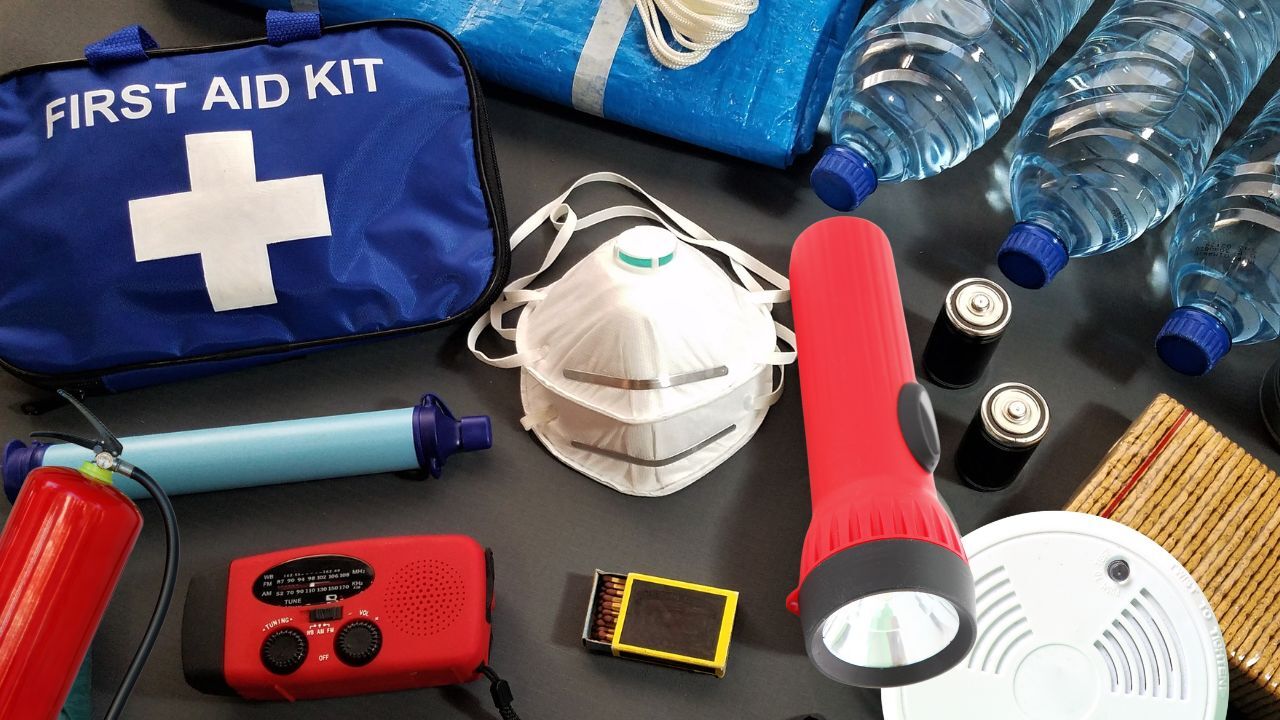 Ensuring a home is equipped with the right safety devices is crucial for protecting both family members and property. From fire prevention to emergency preparedness, having the right tools in place can make all the difference in a crisis. Here are ten essential safety items that every household should have.
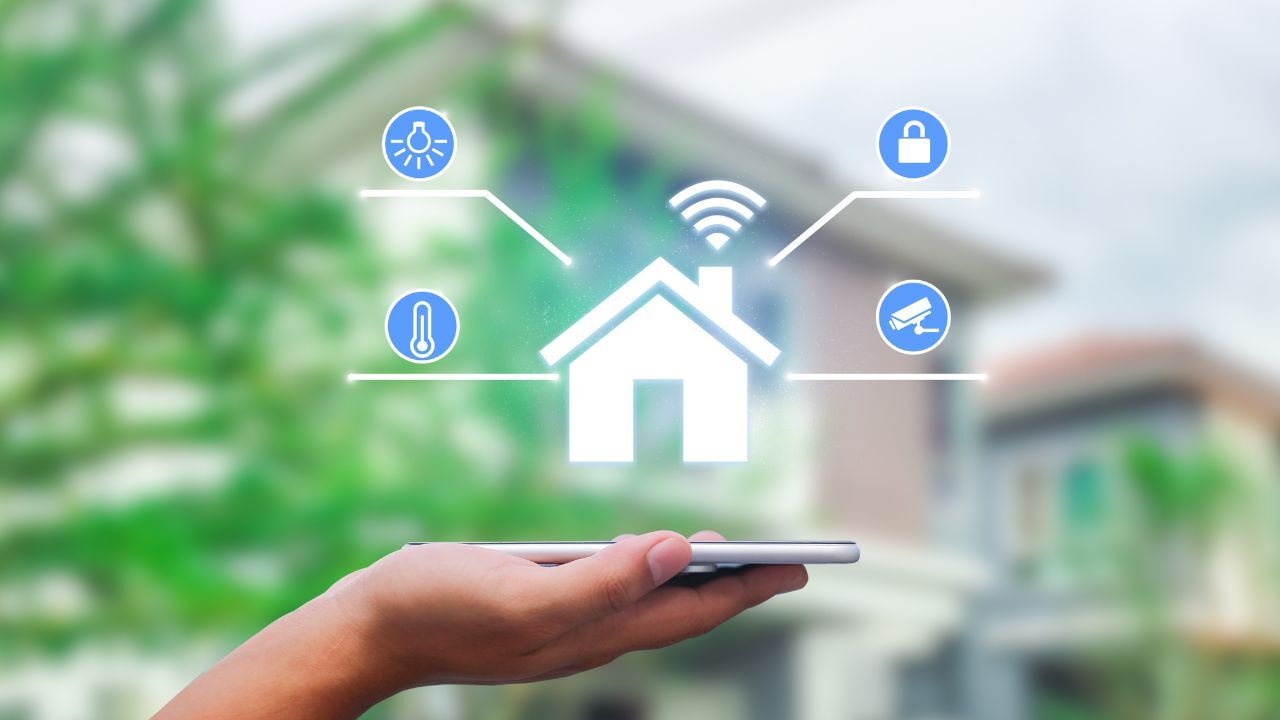 Your home is more than just a place to live, it is where your family feels safe and where your most valuable belongings are kept. Protecting it from potential dangers like fire and flooding is essential. Thanks to modern technology, keeping your home secure has never been easier. Here’s how you can safeguard your home with smart strategies and the latest innovations.
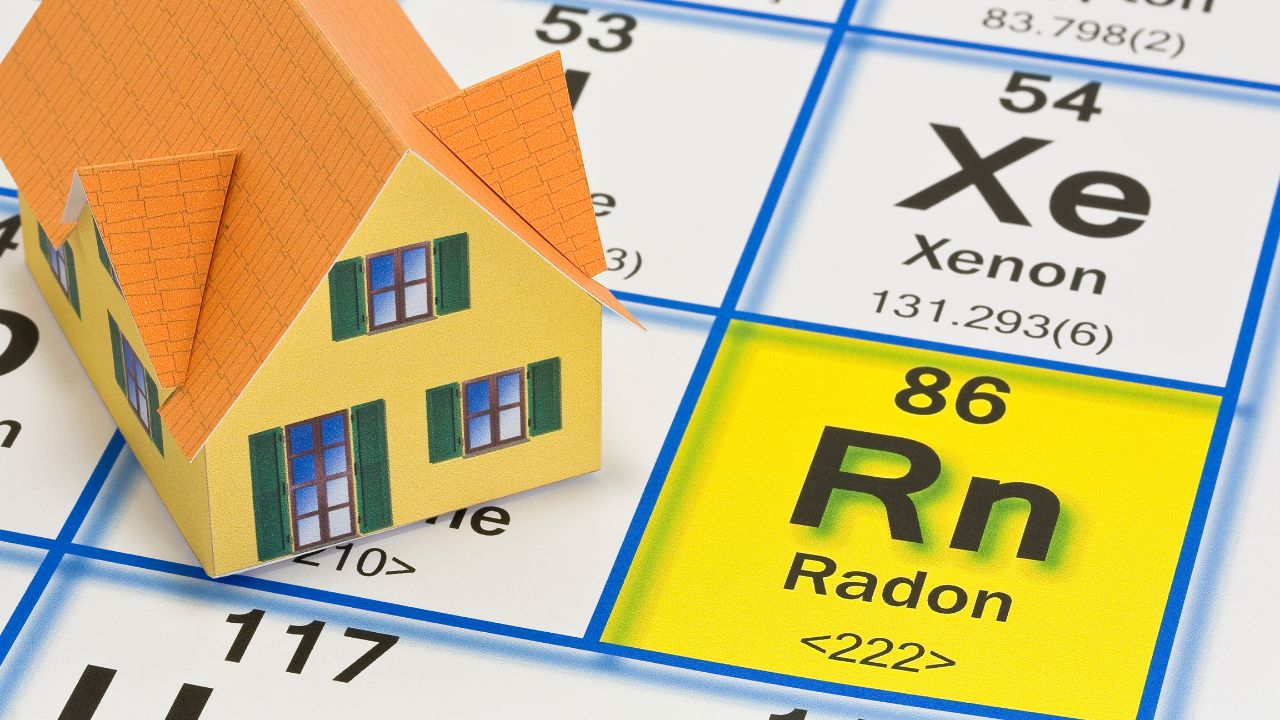 Your home should be a place of comfort and safety, but hidden dangers can pose serious risks to you and your family. Identifying and addressing these hazards is essential to maintaining a secure living environment. Here are some of the most common household dangers and how to prevent them.
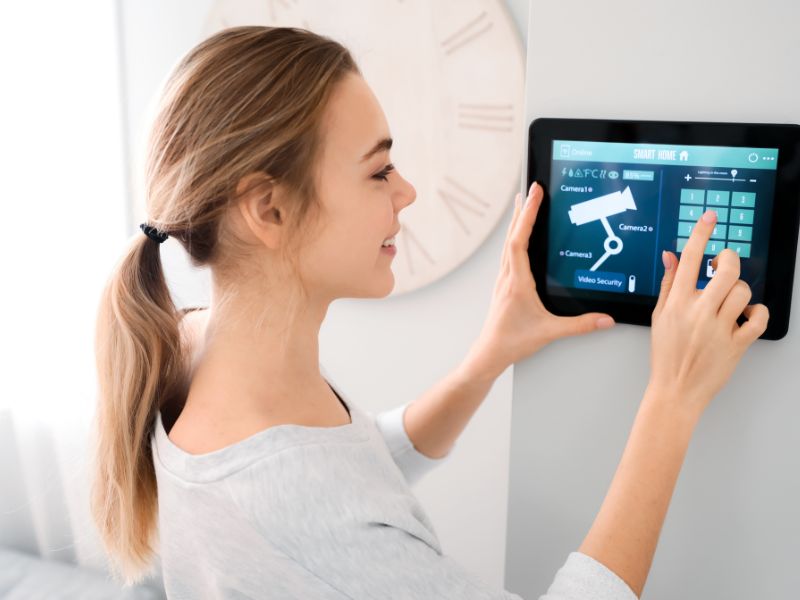 Home is where the heart is, and it’s also where you should feel the safest. Ensuring the security of your home has never been more attainable. Home security systems have evolved from simple locks and alarms to sophisticated, interconnected networks that provide round-the-clock protection. We will explore the latest innovations and timeless strategies to keep your home safe and secure.
 Home renovations can be an effective way to protect your home and family from natural hazards. Start by identifying the potential hazards in your area. This can include natural disasters such as earthquakes, hurricanes, floods, wildfires, and tornadoes, as well as man-made hazards such as gas leaks and fires. Once you’ve identified the potential hazards in your area, create a plan for how you will respond to them and prepare your home to take on these natural disasters and keep your home and family safe.