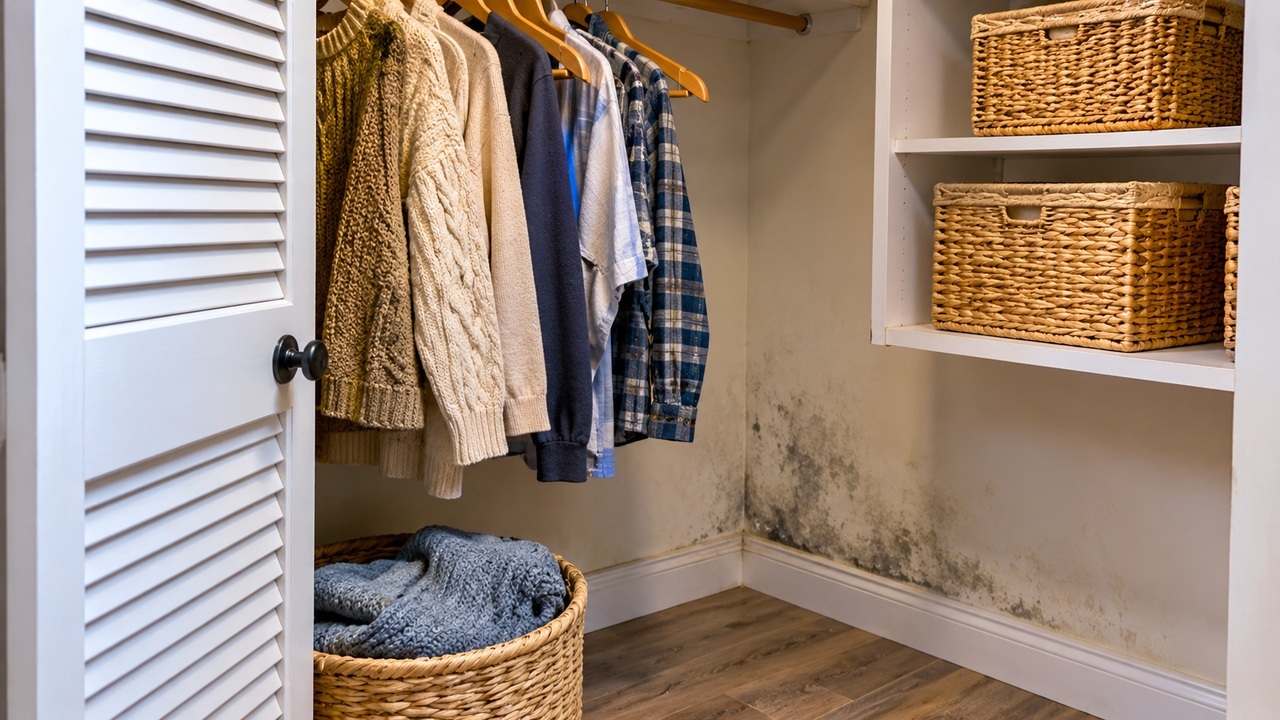
 A home may look spotless during a showing, yet a small closet can reveal something the freshly painted rooms do not. If you open a closet door and notice a persistent musty smell, it is worth asking questions. The odor does not automatically mean there is a serious problem, but it may point to moisture or ventilation conditions that deserve attention.
Why Closets Hold Odors
Closets often have less airflow than open rooms. When a closet sits against an exterior wall or near plumbing, moisture may linger in enclosed spaces. Stored fabrics and cardboard can absorb odors, making the smell stronger. A home that has been closed up for weeks may also smell stale without having an active leak. The important distinction is whether the odor disappears with ventilation or keeps returning.
Look for Visible Clues
Check the lower corners, baseboards, ceiling, and wall surfaces for staining, peeling paint, bubbling finishes, or discoloration. Notice whether carpeting feels damp or shelving appears warped. In a closet near a bathroom or laundry area, consider whether nearby plumbing could be involved. Do not move the seller’s belongings without permission, and remember that an absence of visible stains does not prove moisture is absent.
Ask About Past Repairs
A seller may know about a previous roof leak, plumbing repair, condensation issue, or water intrusion event. Review disclosures carefully and ask what was repaired, when it happened, and whether documentation is available. If a dehumidifier, strong fragrance, or air freshener is running during the showing, that is not proof of a problem, but it can be a reason to ask how the space is normally maintained.
Bring in the Right Professional
A general home inspection is an important starting point. If the inspector identifies suspicious moisture conditions, a qualified moisture specialist or other appropriate professional can investigate further. Testing and remediation should be guided by the actual findings rather than assumptions based on smell alone. Costs can vary significantly depending on the cause and extent of any damage.
A closet may seem like a minor detail compared with the kitchen or living room, but it is part of the home you are buying. Paying attention to small sensory clues can help you ask better questions and avoid overlooking maintenance concerns before closing.