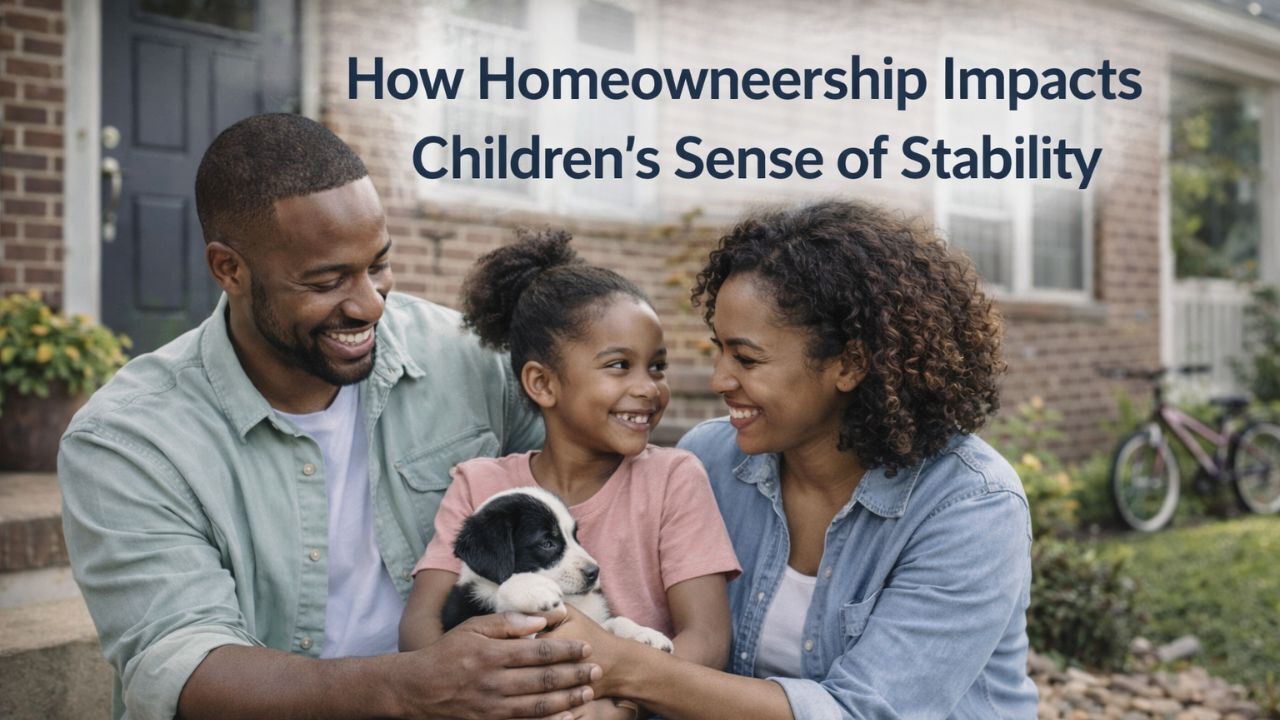
 Children often interpret home as a foundation of safety and consistency. While renting can provide flexibility, homeownership frequently introduces a deeper sense of permanence. Remaining in one environment over time allows routines, friendships, and traditions to take root in meaningful ways.
Consistency Builds Emotional Security
Living in the same home year after year fosters predictability. Familiar surroundings reduce anxiety and create a sense of belonging. Knowing where birthdays will be celebrated and where holidays will unfold strengthens emotional grounding.
Neighborhood Ties Strengthen Development
Remaining in one community allows friendships to deepen. Children who attend the same schools and participate in local activities often develop stronger social confidence. Stability in surroundings supports identity formation.
Personal Space Encourages Growth
Having consistent bedrooms, study areas, and outdoor spaces allows children to feel ownership within the home. Even modest properties can provide this stability when thoughtfully organized.
Ownership Models Responsibility
Children observe maintenance tasks, seasonal preparation, and long-term planning. Participating in simple responsibilities teaches stewardship and pride.
Community Engagement Becomes Habitual
Long-term residency encourages involvement in neighborhood events and civic activities. Stability often leads to stronger community bonds.
Homeownership can provide a stable backdrop for growth, development, and connection. If you are considering how a move may influence your family’s stability and future, connect with us to explore neighborhoods that support long-term belonging.