As you’ll see in this video, unless you have a buyer’s agent remember that the agent works for the seller. Make a point of asking him or her to keep your discussions and information confidential.
Listen to your real estate agent’s advice but follow your own reason on deciding a fair price.
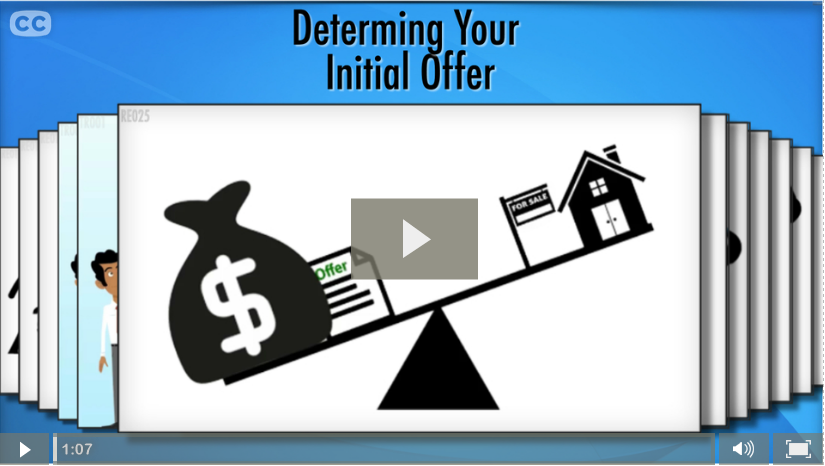
Calculating your offer should involve several factors: what homes sell for in the area, the home’s condition, how long it’s been on the market, financing terms and the seller’s situation.
By the time you’re ready to make an offer you should have a good idea of what the home is worth and what you can afford.
Be prepared for give-and-take negotiation which is very common when buying a home. The buyer and seller may often go back and forth until they can agree on a final price.
 With all of the expense that can go into buying and selling a home, it’s good to be aware of what you can claim and how a home can benefit you come tax time. When the New Year rolls around and you’re sitting down to the task of completing your taxes, here are a few things that you’ll want to keep in mind.
 If you’re moving from a large home into a smaller house or condo, you’re probably looking forward to enjoying a lower utility bill and not having to do as much cleaning. But before you move, you’ll want to take certain precautions to ensure that you’re not overwhelmed.
 If you’re in the process of simultaneously buying and selling a home, you may be in for the most stressful experience of your life. One UK-based real estate survey of over two thousand people found that buying and selling a house is more stressful than divorce, bankruptcy, a death in the family, becoming a parent for the first time, and even planning a wedding!
 If you’ve been following the real estate industry for any length of time, you’ve probably heard the phrase “buyer’s market” at some point. And although the meaning may seem apparent, it takes some study to understand what actually constitutes a buyer’s market.
 Each real estate market is unique in various ways, and your local real estate agent can help you to become more familiar with the trends in your community. For example, in some areas, it may be common for a seller to pay for at least a portion of the buyer’s closing costs, but this may not be common practice in other areas. While each market may be unique, there are some common trends that you can expect to be rather widespread across many communities throughout the rest of the year.