Sunrise Homes & Renovations, Inc.

  • Home
  • About
    • About Us
    • Recognition
      • Disaster Contractors Network
      • US EPA Certified
    • Accessibility Statement
  • Example Models
  • Renovations
  • Resources
    • First Time Home Buyer Tips
    • First Time Home Seller Tips
  • Blog
  • Contact

The 5-Minute Guide To Flood Insurance: What It Is, How It Works, And Whether You Need It

August 5, 2020 by Rhonda Costa

The 5-Minute Guide to Flood Insurance: What It Is, How It Works, and Whether You Need ItYou’ve got house insurance, and assume your property is covered for any type of detrimental occurrence that can possibly take place.

However, not all homeowners are aware that home insurance policies don’t necessarily cover damage related to a flood, as the risks are too great. As a result, homeowners must purchase flood insurance through a private company.

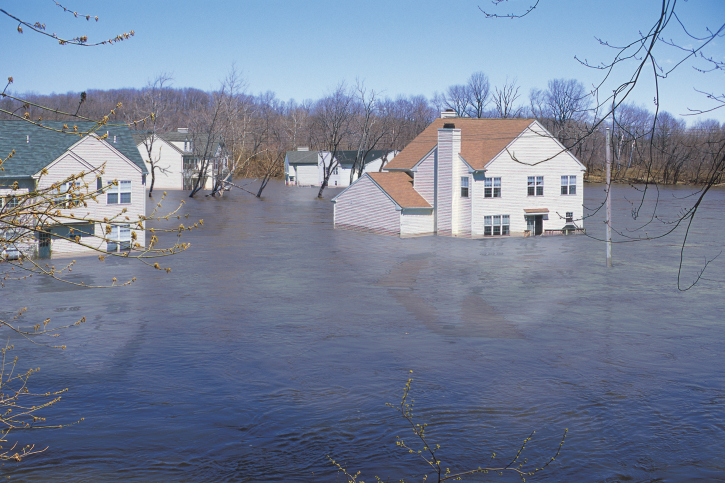
Floods are one of the most common hazards in the US, costing billions of dollars in damage to properties every year.

Since this is a common issue lately, the federal government updating these policies currently so please talk with your real estate professional or local insurance company for the most up to date information.

What Is Flood Insurance?

Flood insurance policies are typically made available to homeowners in flood-prone areas. The majority of insurance policies cover some form of water damage, from things like leaking faucets to bursting plumbing pipes.

However, such policies don’t cover water damage as a result of flooding of rivers or sewers that cause water to ruin a home.

Specific flood protection is provided by the National Flood Insurance Program (NFIP), which is run by the Federal Emergency Management Agency (FEMA). Standard flood insurance policies cover “direct physical damage” to a property resulting from floods.

A separate policy must be purchased to protect the belongings inside the home or building. Homeowners can buy up to $250,000 in coverage for the home, and up to $100,000 in coverage for possessions. Even renters are permitted to purchase flood insurance to cover their possessions.

How Does Flood Insurance Work?

Flood insurance isn’t sold by FEMA directly, but rather is sold to customers through private insurance agencies. Premium rates are determined by the government, and they remain consistent from one insurer to the next.

How much a homeowner pays for their own specific flood insurance depends on a number of factors, including how prone the neighborhood is to floods and how much coverage a homeowner wants. The average annual premium is approximately $520 for $100,000 worth of coverage for a property with no basement, and approximately $615 annually for a property with a basement.

Filing A Flood Insurance Claim

The claims process is like any other insurance claim. Once the claim is filed, the damage will be analyzed by an adjustor assigned by the insurance company. A “proof of loss” form will need to filled out and submitted to the insurer within 60 days of the flood occurrence.

Do You Need Flood Insurance?

It’s necessary to find out if you are eligible for flood insurance before buying it. For residents of a community to be eligible, the community needs to enforce floodplain statutes to lessen the chances of flood damage, after which FEMA ensures that such regulations are followed.

Only those who reside in a community that participates in NFIP can buy insurance – today, about 20,000 communities across the country participate in this program.

FEMA offers maps that outline what areas are at high risk for floods, and those that are at moderate-to-low risk. The law requires homeowners to have flood insurance if the properties are located in a high-risk zone and have a federally-backed mortgage. This is because properties located in these high-risk areas have a 26 percent chance of suffering flood damage during the 30 years that it would take to pay off a mortgage.

Homeowners are not required to buy flood insurance if they reside in a moderate-to-low-risk zone, though it may be a good idea to purchase it anyway. Properties outside the high-risk areas make up over 20 percent of NFIP claims. Homeowners in these areas can purchase up to $200,000 in flood insurance.

The bottom line is, even if you don’t necessarily live in a high-risk zone, this doesn’t mean your home won’t ever get flooded. Many conditions can result in flood damage, including clogged drain systems, flash rainstorms, and damaged levees.

Filed Under: Real Estate Tagged With: Insurance, Real Estate, Real Estate Tips

Condo Damage Caused By Contractors Hired By The HOA: Who Pays?

August 4, 2020 by Rhonda Costa

Condo Damage Caused By Contractors Hired By The HOA: Who Pays?For those who live in a condo, they know that there are numerous advantages that come with this living arrangement. Living in a condo means that other people are going to be responsible for landscaping and common areas while homeowners are still able to build equity in the home.

At the same time, the HOA has quite a bit of power and one of the biggest concerns that people might have involves who pays for the damage in the event that something in the building has been damaged. There are a few important points to keep in mind.

Roof Replacement Contractors

Sometimes, the HOA might hire contractors to work on the roof. During this process, there might be a leak that develops in the roof. This could leak through and damage condos that are on the top floor of the building. This could damage the kitchen ceiling. The association might try to get out of paying to fix certain damages.

It is important to note that those who live in a condo building buy into everything that goes along with ownership. This includes the management and the contractors that are hired by the manager.

Read The Document Carefully

When people move into a condo building, there are certain bylaws they agree to follow. Sometimes, this packet might state that the unit owner is responsible for any damage to a unit that is caused by the association. The bylaws usually state something along the lines of “unit owners need to have homeowner’s insurance.” In this case, the insurance carrier should help the unit owner cover some of the costs of the repairs.

If the condo docs are drafted in this manner, then the unit owner is responsible for the repairs even though the contractor caused the damage.

File An Insurance Claim

While this might not sound like a perfect solution, the unit owner might still not have to pay for the damages. This is why unit owners need to have home insurance. The next step should be to file a claim with the home insurance company. This claim might be able to cover the cost of the repairs that were caused by the contractors hired by the HOA.

Filed Under: Real Estate Tagged With: Contractors, HOA, Real Estate

What’s Ahead For Mortgage Rates This Week – August 3, 2020

August 3, 2020 by Rhonda Costa

What's Ahead For Mortgage Rates This Week - August 3, 2020Last week’s economic reports included readings from Case-Shiller Home Price Indices, data on pending home sales, and the consumer sentiment index released by the University of Michigan. The Federal Reserve released a statement from its Federal Open Market Committee and Fed Chair Jerome Powell gave a press conference. Weekly readings on mortgage rates and expanded reports on jobless claims were also released.


Case-Shiller Home Price Readings Showed Slowing Home Price Gains in May

May readings from Case-Shiller Home Price Indices showed no decline in home prices, but the national pace of home price growth slowed to 4.50 percent from April’s national average of 4.60 percent.

The Case-Shiller 20-City Home Price Index reported slower home price growth in May with only three of 19 cities reporting higher home price growth rates than in April. Data for the Detroit, Michigan metro area was not reported. The year-over-year rate of home price growth for May’s 20-City Home Price Index was 3.70 percent as compared to April’s reading of 3.90 percent.

Phoenix, Arizona led the 20-City HPI with 9.00 percent year-over-year home price growth in May; Seattle, Washington followed with 6.80 percent year-over-year home price growth and Tampa, Florida held third place with 6.00 percent year-over-year home price growth. Analysts credited record-low mortgage rates and slim inventories of available homes with keeping home prices afloat, but the spreading coronavirus pandemic may cause home prices to lose ground as would-be home buyers postpone home purchases due to weakening economic conditions.

In related news, the National Association of Realtors® reported that pending home sales increased by 16.60 percent as compared to April’s reading of 44.30 percent growth in pending home sales. April’s reading was the highest growth rate reported for pending home sales.

FOMC Meeting: Fed Says Ongoing Assistance Needed for Consumers

The Federal Open Market Committee of the Federal Reserve left its key interest rate range of 0.00 to 0.25 percent unchanged and said it didn’t anticipate raising the rate in the next three years based on the coronavirus pandemic’s damage to the current economy and the Fed’s low to medium-term outlook. Fed Chair Jerome Powell said that given current economic indicators, it is important for the government to provide ongoing aid to American consumers.

Freddie Mac reported record low mortgage rates as the average rate for a 30-year fixed-rate mortgage fell two basis points to 2.99 percent. The average rate for 15-year fixed-rate mortgages was three basis points lower at 2.51 percent. Rates for 5/1 adjustable rate mortgages dropped by 15 basis points to 2.94 percent on average. Discount points averaged 0.80 percent for 30-year fixed-rate mortgages and 0.70 percent for 15-year fixed-rate mortgages. Discount points for 5/1 adjustable rate mortgages averaged 0.40 percent.

Jobless Claims Fall, but Remain Far Above Pre-Pandemic Levels

New state jobless claims rose by 1000 claims to 1.43 million claims as ongoing state jobless claims rose to 17.29 million claims from the prior week’s reading of 16.20 million continuing jobless claims. National and state jobless claims rose by 2.04 million initial claims as compared to the prior week’s reading of 2.31 million initial claims. Continuing State and National jobless claims fell to 30.2 million claims from the previous week’s  reading of 31.80 million continuing jobless claims 

The University of Michigan reported that consumer confidence fell in July to an index reading of 72.90 percent as compared to June’s reading of 73.20.

What’s Ahead

This week’s scheduled economic reports include labor-sector reports on public and private-sector jobs, the national unemployment rate, and weekly readings on mortgage rates and new and ongoing jobless claims.

Filed Under: Financial Reports Tagged With: Financial Report, Interest Rates, Unemployment

FOMC Statement: Fed Holds Key Rate Steady as Coronavirus Spreads

July 31, 2020 by Rhonda Costa

FOMC Statement: Fed Holds Key Rate Steady as Coronavirus Spreads

Wednesday’s post-meeting statement of the Federal Reserves Federal Open Market Committee reaffirmed its concern over the coronavirus pandemic and its impact on the economy and health of all Americans. The Committee voted to hold its benchmark target federal funds range at 0.00 percent to 0.25 percent. Analysts do not expect the Fed to raise its key interest rate more than once in the next three years.

Federal Reserve Chair Jerome Powell said that the sharp increase in Covid-19 cases in mid-June kept the economy from recovering after the virus pandemic caused a historic plunge in the U.S. Gross Domestic Product during the second quarter.

Chair Powell described the resurgence of Covid-19 as “flattening the curve of the recovery,” and said that efforts taken to control the virus are “critical.” Restoring the economy to normalcy will require national responses designed to stop the rapid spread of the highly contagious virus.

Fed Chair Powell said the pandemic and its fallout caused the biggest shock to the U.S. economy in living memory. 

FOMC Statement Commits to Using its Full Range of Tools to Ease Impact of Pandemic

The Federal Open Market Committee reasserted its commitment to using ”all available tools to support the U.S. economy during these challenging times.” The Committee’s monetary policy decisions are based on two legal mandates to achieve maximum employment and price stability. 

Committee members said that although the economy has recovered since the initial coronavirus outbreak, economic readings remain far below their pre-pandemic levels. The Fed statement said that the path of economic recovery depends significantly on the course of the virus. The Fed expects the pandemic to severely impact the economy in the near term and to continue damaging the economy in its mid-term forecasts.

The Fed will continue to purchase Treasury bonds and mortgage-backed securities to support credit flow to businesses and households. The FOMC statement stressed the Committee’s flexibility in dealing with current and emerging economic conditions; members will review domestic and global financial conditions and will change monetary policy according to developments.

Filed Under: Financial Reports Tagged With: COVID, Interest Rates, Pandemic

The Top New Power Tools For Home Improvement Projects Currently On The Market

July 30, 2020 by Rhonda Costa

The Top New Power Tools For Home Improvement Projects Currently On The MarketFor many people, their home is the most important investment they will ever make. Therefore, it only makes sense that people will want to spend time improving their house. Sometimes, they simply want to make a nicer place to live.

In other cases, they might be looking to raise the value of their home. Regardless, it is important for people to think about the power tools they are going to use to get the job done.

The right tool could make the difference between a successful project and having to hire someone else. There are a few tools on the market that every homeowner should consider.

A New Power Drill

This is usually the first item on the list when it comes to a home improvement project. While many homeowners probably already have a power drill, there are a few new models that have reached the market. Take a look at some of the top brands and look at their latest models.

Sometimes, they have removable drill bits for specialized tasks, different power settings, and could even reverse the direction in which they spin. This is important for every home improvement project.

A Circular Saw

This is one of the most important saws that everyone should have when it comes to a home improvement project. When it comes to this saw, safety should always come first; however, these saws are popular because they can slice through thick materials with ease. They come both with and without a cord. When it comes to strength, a circular saw is tough to beat. They are ideal for working in tight spaces.

A Cordless Screwdriver

While a screwdriver is a traditional tool for home improvement projects, a power screwdriver is ideal. A cordless option takes the effort out of most tasks and makes it easier for someone to complete home improvement tasks in a short amount of time. They can even spin in both directions, making them useful for both tightening and loosening screws.

Find The Right Power Tools

These are just a few of the top power tools for home improvement projects. Everyone must take the time to find the right power tools for their next home improvement job.

Filed Under: Real Estate Tagged With: DIY, Power Tools, Real Estate Tips

Maximize Your Backyard’s Privacy With These Unique Ideas

July 29, 2020 by Rhonda Costa

Maximize Your Backyard’s Privacy with These Unique IdeasIf you’re a homeowner, your backyard is probably a space where you look forward to spending private, quality time watching your children play or entertaining dinner guests.

The privacy you and your family treasure could suddenly be put at risk if your neighbors finish renovations allowing them to see into your backyard, or if a tree that once hid your backyard from view needs to be removed.

If you’re looking to reclaim the privacy you’ve lost in your yard, here are some options you will want to consider.

Your Property Line Is A Natural Barrier That You Can Use To Reclaim Your Family’s Privacy

The first option you might consider if you’re looking to reclaim your yard’s privacy is probably building a fence – but depending on your budget, your relationship with your neighbors, and the look you want in your yard, a fence might not be the best option.

Consider planting a fast-growing hedge or other greenery along your property line instead. Italian cypress, for instance, will look great, grow very quickly, and will eventually give you all the privacy you need. 

Break Up Your Nosey Neighbors’ Line Of Sight By Installing Raised Beds Or Berms

If you already have a green thumb and love nothing more than working on your backyard garden, you can have your cake and eat it too by replanting your current backyard plants in raised beds or berms.

Raised beds will add up to two or three feet of height to your plants without taking away the area or square footage in the rest of your backyard, making it an ideal option for homeowners will smaller backyard spaces. Installing raised beds or berms could also be a great solution for your garden if you have trouble planting due to the presence of clay or simply poor soil.

Lumber Isn’t Your Only Fencing Option

Though fencing seems like an obvious and possibly boring option to liven up your backyard and improve the aesthetic of your space at the same time, there are ways you can get creative with fencing that you might not have considered. Putting in latticework can alleviate the claustrophobic feeling that might come with enclosing your space fully with a solid fence, giving you some visibility through the lattice.

You can spice up the look of your enclosure by weaving plants through your lattice, or if you have the patience, get some ivy growing through your enclosure.

Maximizing the privacy of your outdoor space is easy if you’re creative and you enjoy working outdoors. If you love nothing more than pruning and shearing, then try to reclaim your space through planting rather than installing a fence or another permanent structure that you can’t change and therefore might regret later.

If you’re worried about how your backyard transformation could affect the value of your home, or if you’re looking for more privacy options, contact a real estate professional that you trust for the backyard design help you need.  

Filed Under: Around The Home Tagged With: Home Tips, Real Estate, Real Estate Tips

  • « Previous Page
  • 1
  • …
  • 228
  • 229
  • 230
  • 231
  • 232
  • …
  • 291
  • Next Page »

Rhonda & Steve Costa

Rhonda & Steve Costa

Call (352) 398-6790
Sunrise Homes & Renovations, Inc.

Contractors License #CBC 1254207

Let’s Keep In Touch!

  • This field is for validation purposes and should be left unchanged.

Connect With Us on Social Media

Categories

Looking For Something?

Our Location


Spring Hill, FL 34608

Equal Housing Opp

Return to top of page

Copyright © 2026 Sunrise Homes & Renovations, Inc.. All rights reserved.   Log In