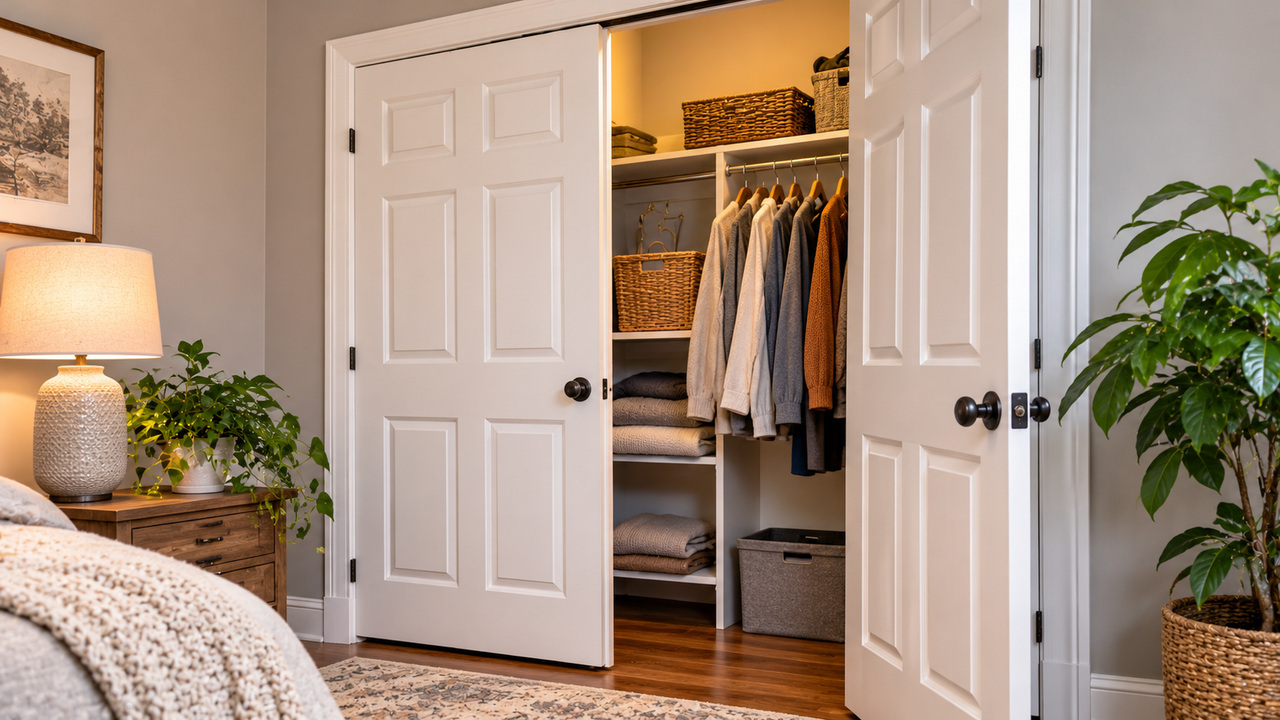
 Closet space is easy to judge by looking at a floor plan or counting shelves. What buyers sometimes overlook is whether the doors and surrounding layout make that storage convenient to use. A closet may technically be large enough for your belongings but still create daily frustration if you cannot open it comfortably or reach what is inside.
Open Every Door Fully
During a showing, open the closet doors in bedrooms, hallways, and laundry areas. Watch for doors that hit furniture, nearby walls, light fixtures, or another door. Sliding doors can save floor space, but they may limit access to one section of a closet at a time.
Check whether hinges feel loose, tracks stick, or doors scrape the flooring. These issues may be simple maintenance items, but they can also affect how usable the space feels.
Picture Your Actual Furniture
An empty bedroom can make closet access look effortless. Once you add a bed, dresser, nightstand, or desk, the walking path may become much narrower. Think about where your furniture would sit and whether the closet could still open without moving anything.
Measurements are especially helpful in smaller rooms. Bring the dimensions of larger furniture pieces and compare them with the room layout rather than relying only on photographs.
Check Reach and Visibility
Look at the depth of shelves, the height of hanging rods, and the lighting inside the closet. Deep corners may be difficult to reach, while high shelves may require a step stool. A closet with a single narrow opening can hide storage that is hard to use efficiently.
Also consider the door swing in a hallway or bathroom. A door that blocks a nearby passage may create an inconvenience when multiple people are getting ready at the same time.
Separate Easy Fixes From Larger Changes
Replacing a damaged track or adding organizers may be manageable projects. Changing a closet opening, moving walls, or altering electrical fixtures can be more involved. If a modification matters to your purchase decision, obtain professional guidance and a realistic cost estimate before closing.
In older homes, unusual closet sizes and door configurations can be part of the character of the property. They are not necessarily defects. The question is whether the design works for your needs.
Small Layout Choices Add Up
A house does not have to offer oversized walk-in closets to provide useful storage. Well-positioned doors, accessible shelves, and clear walking paths often matter just as much as square footage.
During your next tour, take a few extra moments to open, close, and stand in front of every closet. It is a simple test, but it can help you imagine the routines you will actually live with after moving in.