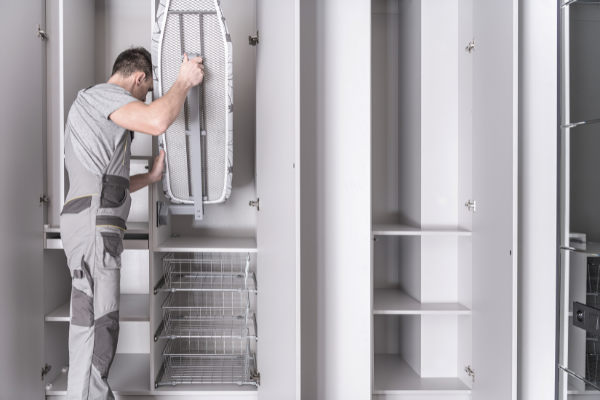
 There are many homeowners who are looking for help with storage. Even after moving in, many homeowners still have a lot of items they need to get rid of and this is where built-in storage solutions can be helpful. Even though some storage options might be pricey, there are inexpensive options available as well. Take a look at a few solutions below, and improve the storage situation.
Use Space Under the Stairs
One option that many homeowners overlook is the space under the stairs. If there is a second story, there may be an area under the staircase that looks like a storage space. There should be plenty of opportunities to add a bookcase, a shelf, or even a cabinet. Even a few drawers can make a significant difference.
Consider Going Under the Bed
Another option is to use storage space under the bed. If the bed is on a frame, there should be room to add a box or two. This could be a great way to create more storage space in the bedroom without adding another piece of furniture. There might even be opportunities to put the bed on risers, creating even more room underneath the bed.
Use Tilting Drawers
Homeowners may want to get creative by adding tilting drawers. If there is an awkward location in the kitchen, a hinge solution might be the answer. What this means is that it is possible to pull the door out of the drawer and create additional storage inside the area. This is a great way to hide a garbage can or a recycling bin. Most contractors can add this type of storage relatively quickly. This could also be a great solution in the bathroom.
Take Advantage of Sliding Storage
Homeowners also need to take advantage of sliding storage. This is a great way to get more room out of narrow spaces. For example, there might be room in the kitchen to add a sliding shelf that doubles as a spice rack. One possible location is the area between the refrigerator and the wall or counter. There might also be a small spot between the bathtub and the wall, which could act as a great shelf for linens.
 A lot of potential buyers have a set number of bathrooms they need in their homes. Therefore, one of the possible ways to increase the value of a home is to add more bathrooms. It is possible to add a half bath to some homes. Even a small bathroom on the first floor can make a home significantly more attractive. At the same time, adding a powder room is not necessarily the best renovation project for all homeowners. What do homeowners need to think about before adding a powder room to the home?
  Houses across the country come in all shapes and sizes. Some of them are older than others, so they might come with aspects that are a bit outdated. Unfortunately, there are a lot of locations where older homes might still have asbestos in them. While this should be something that comes up on the inspection, buyers need to be aware of these serious issues. If the home was built before 1980, there is a major chance that the building might have asbestos in it. Fortunately, there are alternatives to this type of insulation.
 There are more residential homes with pets in the U.S. than in any other country. However, that also means that the home also takes on the characteristics of the pet, including the smells, and that can make things a bit difficult when it comes time to sell that home. Homeowners with pets will have to work at removing any signs the pet has left behind. Here are four tips on how to do that.
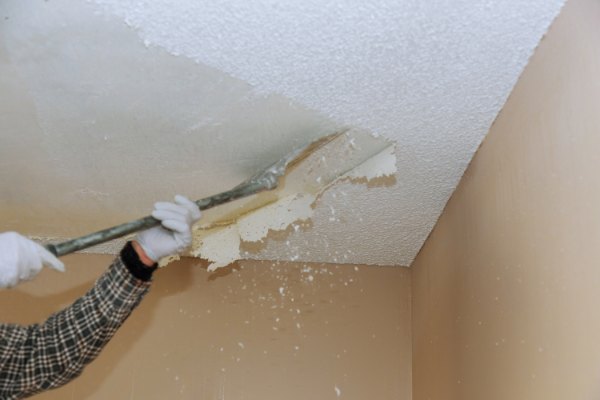 During the 1970s, home building picked up on the idea of a cheap but effective way to reduce sound travel from one floor to the next: popcorn ceilings. Essentially, after the drywall was installed, a finisher would come in with a plaster mix and spray on the ceiling drywall for a bit of a lumpy effect. The disparate clumps and bumps not only created a texture to an otherwise flat-looking ceiling, they also helped break up sound waves. After being spray-painted in white, the ceiling texture essentially blended with the rest of the room to produce a finished look. Popcorn ceilings were such a common approach, entire home subdivisions had cookie-cutter ceiling work done by teams on new homes.
 Those who are taking out a loan for a home will probably be required by the lender to purchase home insurance. Even those who don’t need a loan will still need to make sure that they protect their property accordingly with a comprehensive home insurance policy. This is important for making sure homeowners have the money to replace their belongings and repair their property in the event of a disaster. At the same time, homeowners do not want to spend more than they must for a home insurance policy.