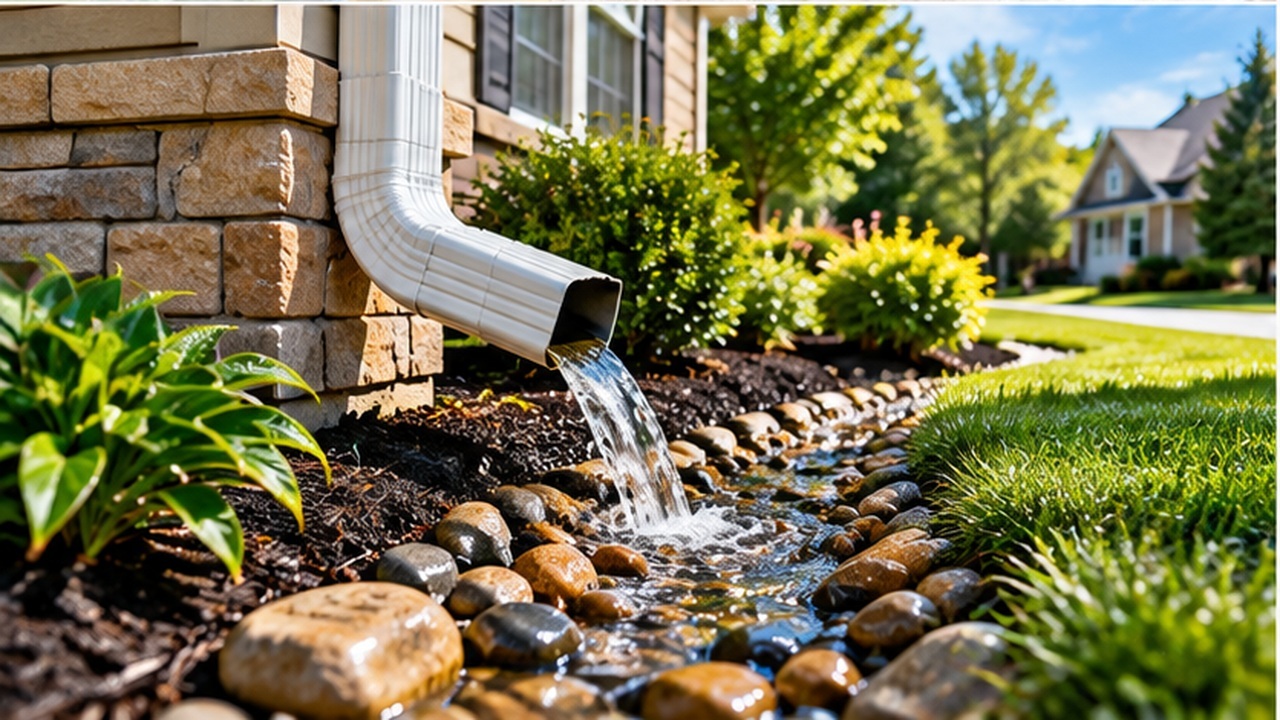
 A home’s roof is designed to protect the interior from rain, but what happens to the water after it reaches the gutters? Many buyers focus on the condition of the roof without considering where the water travels once it leaves the house.
Understanding drainage patterns can help buyers identify potential maintenance concerns and evaluate how well a property manages heavy rainfall.
Gutters Are Only the Beginning
Gutters collect water as it runs off the roof and direct it toward downspouts. However, the downspout is not necessarily the end of the drainage system.
Some homes release water onto splash blocks, while others use underground piping, extensions, or drainage channels to move it away from the foundation.
Buyers should look at where each downspout ends and whether the surrounding ground appears designed to carry water away from the structure.
A downspout that releases large amounts of water directly beside the foundation may deserve additional attention.
Look at the Direction of the Ground
The slope of the land surrounding a home plays an important role in drainage. Ideally, the grading should encourage surface water to move away from the foundation rather than collect against it.
Low areas, sunken landscaping, or surfaces that slope toward the house may allow water to accumulate during storms.
Buyers should also pay attention to driveways, patios, and walkways. These hard surfaces can redirect rainfall toward unexpected areas.
A beautiful landscaped yard does not always reveal how the property behaves during heavy rain.
Watch for Evidence of Standing Water
Even when the weather is dry, certain conditions may suggest previous drainage problems.
Buyers can look for soil erosion, staining along foundation walls, washed-out landscaping, or areas where sediment has collected.
Water marks near garage entrances and unusually damp sections of a yard may also justify further investigation.
These observations are not proof of a serious problem, but they can help buyers identify questions for a home inspector or drainage professional.
Consider Neighboring Properties
Water movement does not always stop at property boundaries. A neighboring driveway, retaining wall, or elevated yard may influence where runoff travels.
Homes located on slopes or at the bottom of a street may receive water from surrounding areas during storms.
Buyers should observe the entire property rather than focusing only on the house itself.
A roof can be in excellent condition while the surrounding drainage still needs improvement. Before purchasing, buyers should understand how water moves across the lot, where it collects, and whether existing drainage features appear to be functioning properly.
Taking a closer look at rainwater management can help protect both the home and the buyer’s long-term maintenance budget.